
Public History of difficult Pasts
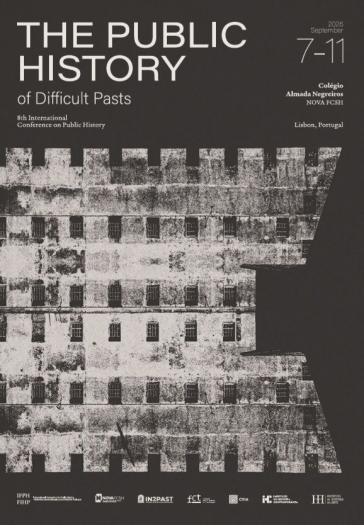
From September 7 to 11, 2026, the 8th conference of the International Federation for Public History (IFPH_Final_Programme.pdf) was held in Lisbon. Since its professionalization and growth, public history has been deeply engaged in bringing to light so-called “difficult” pasts—precisely the theme of this gathering. But it will not have escaped anyone’s notice how much the recent context has deteriorated, with a proliferation of attacks and statements against historical scholarship and the defense of democratic values. The Lisbon conference thus served as an opportunity to reaffirm the need for critical engagement—a position championed by practitioners of public history. In many countries, practices such as censorship, imposed silences, the denial of historical realities, or the marginalization of certain viewpoints have indeed become commonplace.
A Diversity of Approaches
 As part of the conference, some fifty panels provided a forum for discussing topics as diverse as the place of the past in the public sphere, the representation of difficult pasts in museum settings, the impact of the emergence of artificial intelligence and digital developments on historical practices, and the role of video games and marginalized historical narratives—particularly those of abused children and homelessness. Of course, more traditional issues such as the history of sites of violence, the question of colonization and slavery, and that of decolonization in all its diversity were also discussed. The conference also served as an opportunity to promote new publications in the field of public history, notably the volume edited by Thomas Cauvin (Center for Contemporary and Digital History, Luxembourg) and Joanna Wojdon (University of Wrocław) on the long history of public history practices in Europe. The entire volume is available online (The Long History of Public History in Europe). New ongoing projects addressing the challenges of public history and the issues surrounding diaspora histories were also presented. Driven by historians from numerous European countries as well as North and Latin America, Africa, Asia, and Oceania, public history is increasingly establishing itself as a resolutely cross-disciplinary and transnational practice, while often drawing on local and participatory practices.
The Conciliare Project
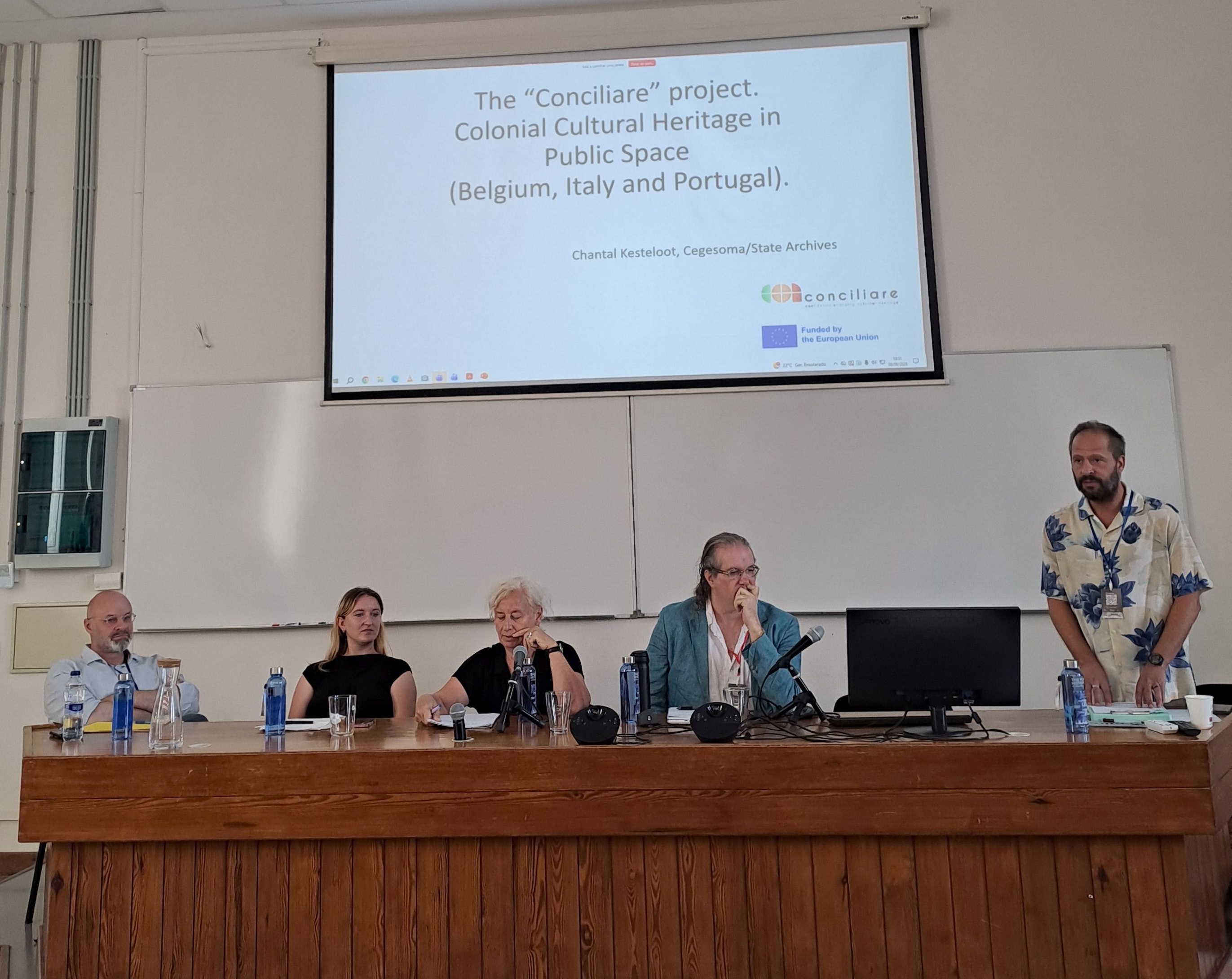
The conference also provided an opportunity to present the Conciliare project—in which Cesgesoma/State Archives is a partner—which is now in its final phase, set to conclude in March 2027. We therefore felt it would be worthwhile to take advantage of the conference to present one of the project’s main areas of focus, which concerns colonial heritage in the public sphere in Belgium, Italy, and Portugal. Beyond simply compiling an inventory, the project has also focused on in-depth studies of a variety of cases in each of the areas under consideration, before embarking on co-creation initiatives with stakeholders from the nonprofit sector. This latter approach, which draws heavily on the practices of public history, may be seen as one possible response to the issue of difficult pasts.