
Willem Meyers has left us ...
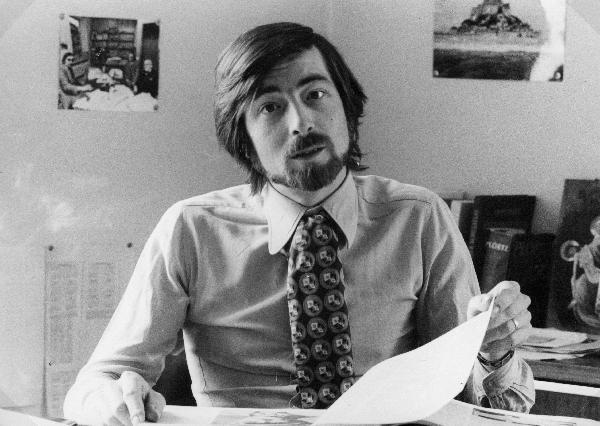
Wim Meyers' passing on 15 January 2026 means that more of the memory of the “old Centre” is gone. He was among the first to join the institution in the early 1970s, when it was known by the somewhat unwieldy French/Dutch acronyms CREHSGM/NCWOII... simply referring to the Centre for Research and Historical Study into the Second World War…
Wim was born on 30 March 1943 and often recalled that one of his earliest childhood memories was sitting on the lap of Cyriel Verschaeve, priest, poet, Flemish nationalist and Nazi... After studying history at the University of Ghent, he began his career at De Standaard, where he got to know Frans Selleslagh (former colleague at CegeSoma, who died in October 2008). They developed a strong friendship and, by chance, or perhaps because of shared interests, ended up working together in our institution. Wim became our librarian and carried out his duties with zeal and eclecticism until the early 1990s.
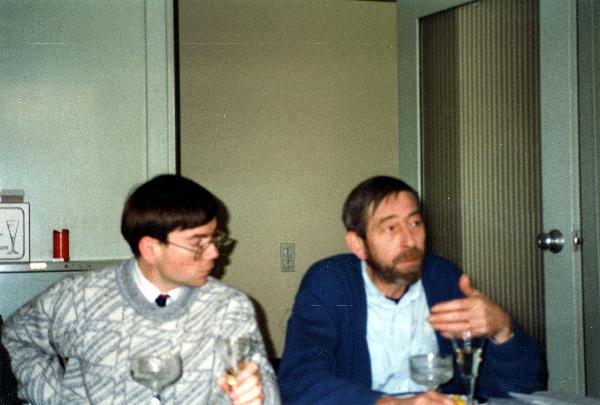
© CegeSoma/State Archives
The Centre owes him several high-quality publications. Among others, his pioneering work on the impact of the German occupation on Belgian society, "De vijand te lijf", published in 1974 and co-authored with Frans Selleslagh, stands out, as well as two very important articles, first on the councils of mayors and aldermen in 1940-1944, "Burgemeesters, schepenen en gemeentelijke administraties" , in Etienne Verhoeyen, België in de Tweede Wereldoorlog, Deel 9, Kapellen, 1990, pp. 84-99, and then on the « Flemish national leadership » in Germany after September 1944, ”De Vlaamse Landsleiding. Een Emigrantenregering in Duitsland na september 1944" in Bijdragen tot de Geschiedenis van de Tweede Wereldoorlog, no. 4, 1972, pp. 29-86.
At a time when library catalogs were recorded on small index cards, he spent many years compiling bibliographies on Belgium during World War II. Generations of students and researchers remember his first volume covering the period 1970-1980, printed on yellow paper. It included not only standard publications but also press clippings and numerous local publications. An indispensable tool back then.
Along with the rest of our pioneering team, he conducted numerous interviews. In 1972-1988, he produced a series of interviews on Flemish collaboration, with a particular focus on the VNV.
Coming from a Flemish nationalist family, he was sensitive to the place and history of the Flemish people in Brussels. As such, he was one of the founders of the Archive and Museum of Flemish Life in Brussels (AMVB), on whose board he served for many years.
Always available to the public, despite his shyness, and eager to listen to young researchers so he could help and guide them, he had a wealth of knowledge. He left CegeSoma in the late 1990s. to devote himself fully to his beloved family. Those who knew him also remember his sense of humor.
Alain Colignon